Your Agency’s Workload Is Falling by a Third: Where Will the Value Go?
Good morning,
This week, we're tracking a pivotal power shift in marketing—from an agency-led service model to a technology-driven, end-to-end workflow where your browser itself becomes an autonomous decision-maker.
First up: The launch of ChatGPT Atlas and Perplexity Comet has just turned the web browser from a passive window into an active, memory-retaining, decision-making collaborator. As AI starts to synthesize information and represent your brand without the user ever clicking your link, the question for every marketer shifts from "How will users find us?" to "How will their AI choose to represent us?" Clarity, context, and factual density are the new SEO.
We also break down the hard numbers from a new BCG report showing that marketing leaders expect agency contributions to fall by up to 14 percentage points as Agentic AI and technology providers pick up the slack. The consensus is clear: the real opportunity of AI is not in a new tool, but in "reinventing their entire operating model."
If you're looking to future-proof your strategy, this issue covers the major pivots—from your content's structure to your agency's contract.
- The Marketing Embeddings Team
BIG PICTURE
A New Mandate for Agency Partnerships
A new study released by BCG and MMA global found that CMOs are skeptical that their agencies are ready to scale AI. 86% of CMOs believe that their creative agencies are not currently using AI at scale, while 67% say the same for the media agencies. While training and investment in AI technologies can help bridge the gap, CMOs believe that, at its core, there is a misalignment of incentives because of the existing commercial model of agencies. Many CMOs think that in order for agencies to really justify their role as a partner, they need to revise their compensation structures, which means passing back some of the savings from AI operational efficiency.
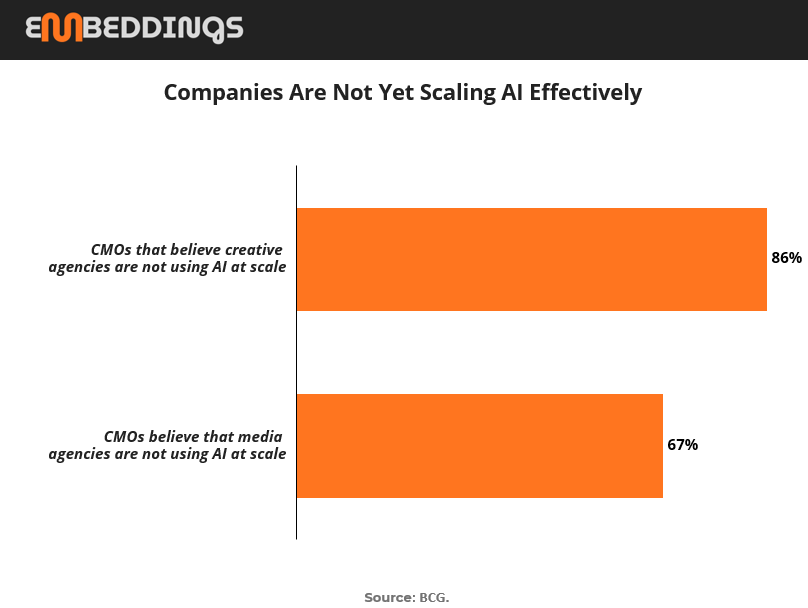
We can’t underestimate the importance of this finding for the future of the marketing operating model and the role of agencies in it. CMOs think that in the next 12-18 months, agencies will lose about a third of their share in the overall marketing workflow, most of which is expected to shift to technology providers, who are building new capabilities offering creative and media personalization services as an add on (free or appearing as next to free) vs as the main service.
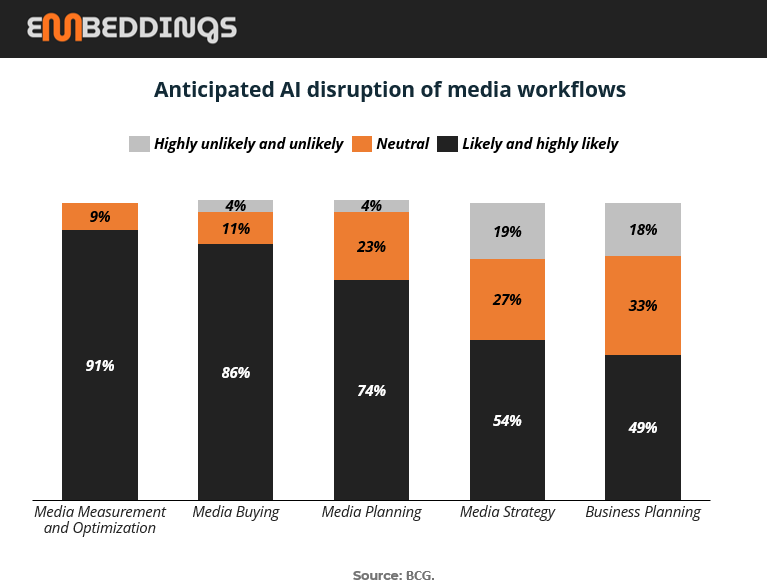
Add to that, the expectation that most of the media and creative workflows will be disrupted in the next 12 months and you have the perfect storm for the troubled business model of agencies.
WHAT WORKS
The AI Browser Wars Are About to Rewrite Marketing
Two quiet product launches—ChatGPT Atlas and Perplexity Comet—just triggered one of the biggest shifts in digital behavior since mobile browsing. For the first time, the browser is no longer a passive window. It’s an active collaborator that reads, reasons and responds on the user’s behalf. And this changes everything for marketers.
And the scale of this shift isn’t theoretical anymore—it’s visible in the numbers. AI-enabled browsers are projected to grow from roughly $4.5B in 2024 to more than $70B by 2034, a 15x expansion that signals a full channel transformation, not a UI upgrade.
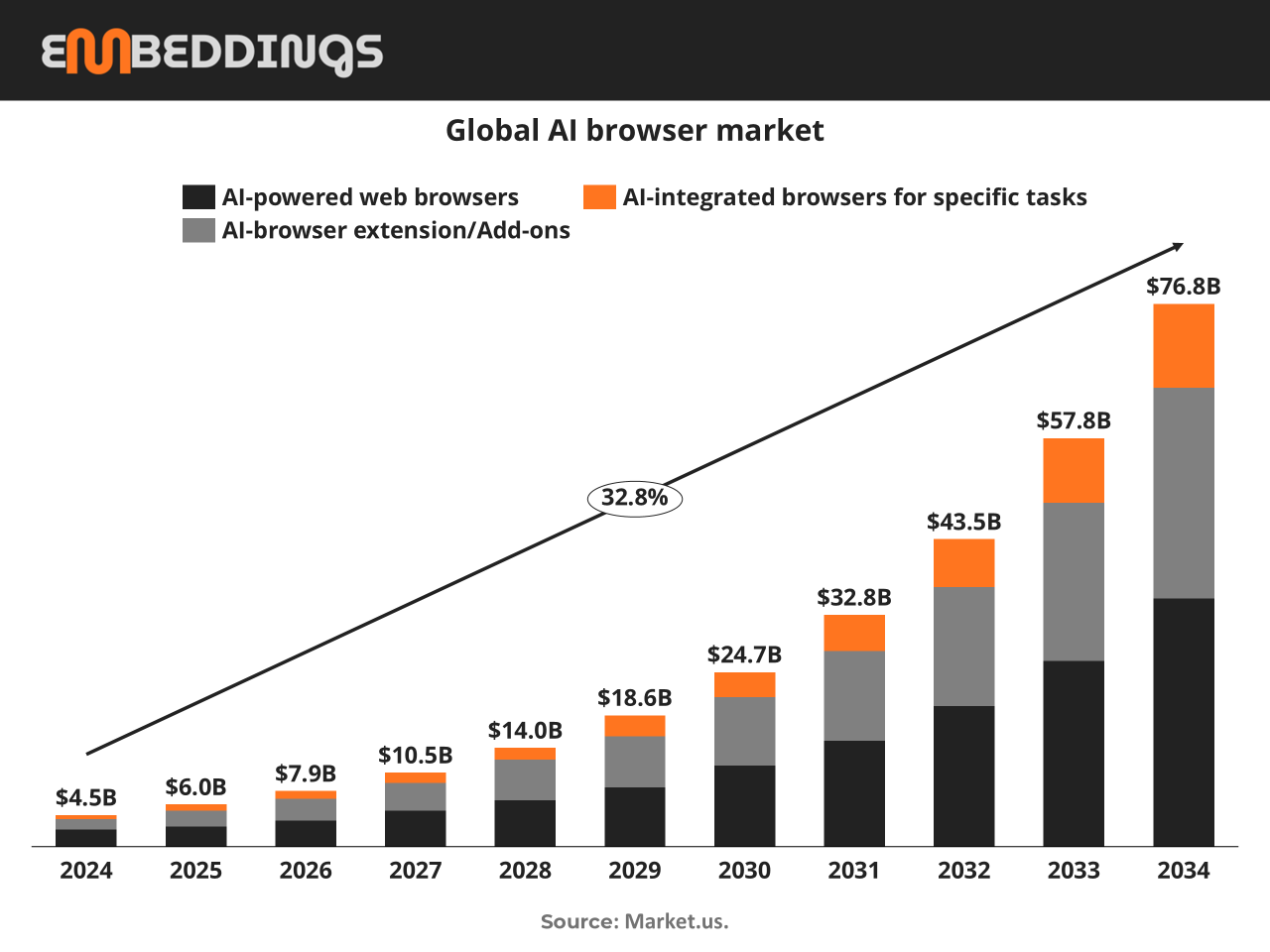
As the market accelerates, the mechanics of how users access information are being rewritten. Instead of searching, clicking and hopping across multiple tabs, AI browsers interpret intent and deliver direct, synthesized answers. Atlas summarizes any page and executes multi-step actions. Comet goes further—cross-referencing open tabs, merging sources and creating a research layer above the web itself. When the browser summarizes the internet for the user, the question becomes: what content does the AI choose to surface? In this new environment, clarity, context and factual density become the new SEO.
This shift also collapses work cycles. Research, competitive intelligence, trend scanning and content mapping that once took hours now compress into minutes. The bottleneck is no longer information gathering—it’s interpretation. Teams that learn to direct AI browsers as strategic partners, not just summarizers, free up space for creativity, experimentation and narrative-building.
Then comes the wildcard: memory. Both Atlas and Comet retain what users highlight, search and revisit. Personalization is no longer happening on your website—it’s happening inside the browser. The assistant can remix your content, blend it with competitor information and present a tailored version to the user, even if they never visit your page. You can't control the remix, but you can influence it by offering the AI clean, credible, structured information.
Traffic patterns will inevitably shift. As AI browsers compress discovery into a single interaction, referral volume may fall even as high-intent engagement rises. A user may never click your link, yet still “meet” your brand through an AI-generated comparison. Attribution models will need a reboot, because the path between awareness and action collapses when the browser thinks for the user.
And with power comes risk. AI browsers may misrepresent your tone, surface outdated information, or compress nuance out of your message. Combine that with privacy concerns and prompt injection risks, and marketers now need to manage not only what they publish, but how AI interprets it at the edge.
But here’s the critical piece — and the one that makes AI browsers inevitable: users are already ready to let AI guide discovery. According to a recent survey by adMarketplace, 60% of American shoppers report having shopped with AI.
That means AI isn’t a fringe behaviour — it’s entering the mainstream.
The implication for marketers is How will users find us?” to “How will their AI choose to represent us?”
In this world, referral traffic may decline even as high-intent engagement rises; the user might never click your site, yet still experience your brand through the AI’s curated output. Attribution models and funnel logic must evolve accordingly.
Brands that adopt now — by supplying clear, credible, structured content that AI assistants can meaningfully interpret — will secure a head-start. Because make no mistake: the browser is becoming a channel in its own right.