45% of consumers already use AI to shop. Most brands aren't ready.
Good morning,
AI is showing up everywhere consumers make decisions, and most brands are still figuring out the basics. This week's signals: Bumble is launching an AI dating assistant, Amazon rolled out a free AI health agent for Prime members, and a U.S. court ordered Perplexity to stop shopping on Amazon without permission. In the big picture section, we dig into an IBM-NRF study of 18,000+ consumers across 23 countries, the data on how AI is reshaping the buying journey before customers ever reach your site. And we spotlight Outset, the company replacing focus groups with AI moderators at survey scale.
Let's get into it.
Vas
This Week's Signals
AI & Marketing
1. Bumble is launching an AI dating assistant called "Bee." The AI privately learns user preferences and suggests matches based on compatibility and goals, not just swiping.
2. Amazon launched Health AI, a free agentic assistant that reads medical records, books appointments, and manages prescriptions, with five free visits for Prime members.
AI & Law
3. A U.S. court ordered Perplexity to stop shopping on Amazon. Perplexity's Comet browser was accessing Amazon without permission. The court told them to stop and destroy the data.
AI & Research
4. Andrej Karpathy released "autoresearch." An AI agent that runs experiments overnight and improves itself while you sleep. Open-source.
BIG PICTURE

Your Customers Are Already Using AI to Shop. Most Brands Aren't Ready.
Consumers aren't waiting for brands to figure out AI. They're already using it, and they're making decisions before they ever reach your site, your app, or your store.
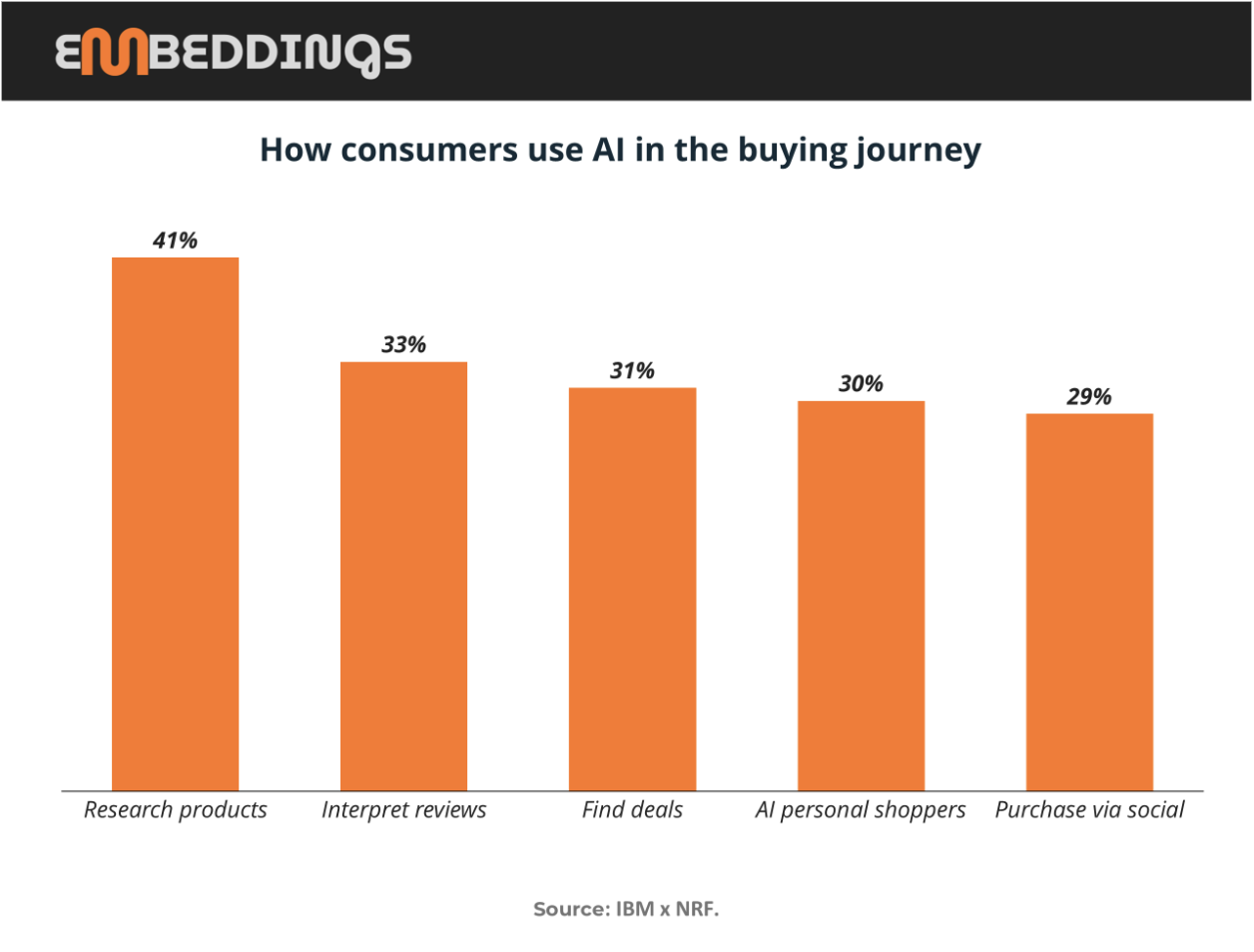
An IBM and NRF study of 18,000+ consumers across 23 countries found that 45% now turn to AI during their buying journeys. 41% use it to research products. 33% use it to interpret reviews. 31% use it to find deals. The buying process is being reshaped upstream, in the discovery and comparison phases, where most brands have no presence and no influence.
At the same time, 72% of consumers still shop in physical stores. This isn't a digital-replaces-physical story. It's a story about a new layer between intent and purchase. AI is becoming the filter consumers use to decide what's worth their time, online or in person.
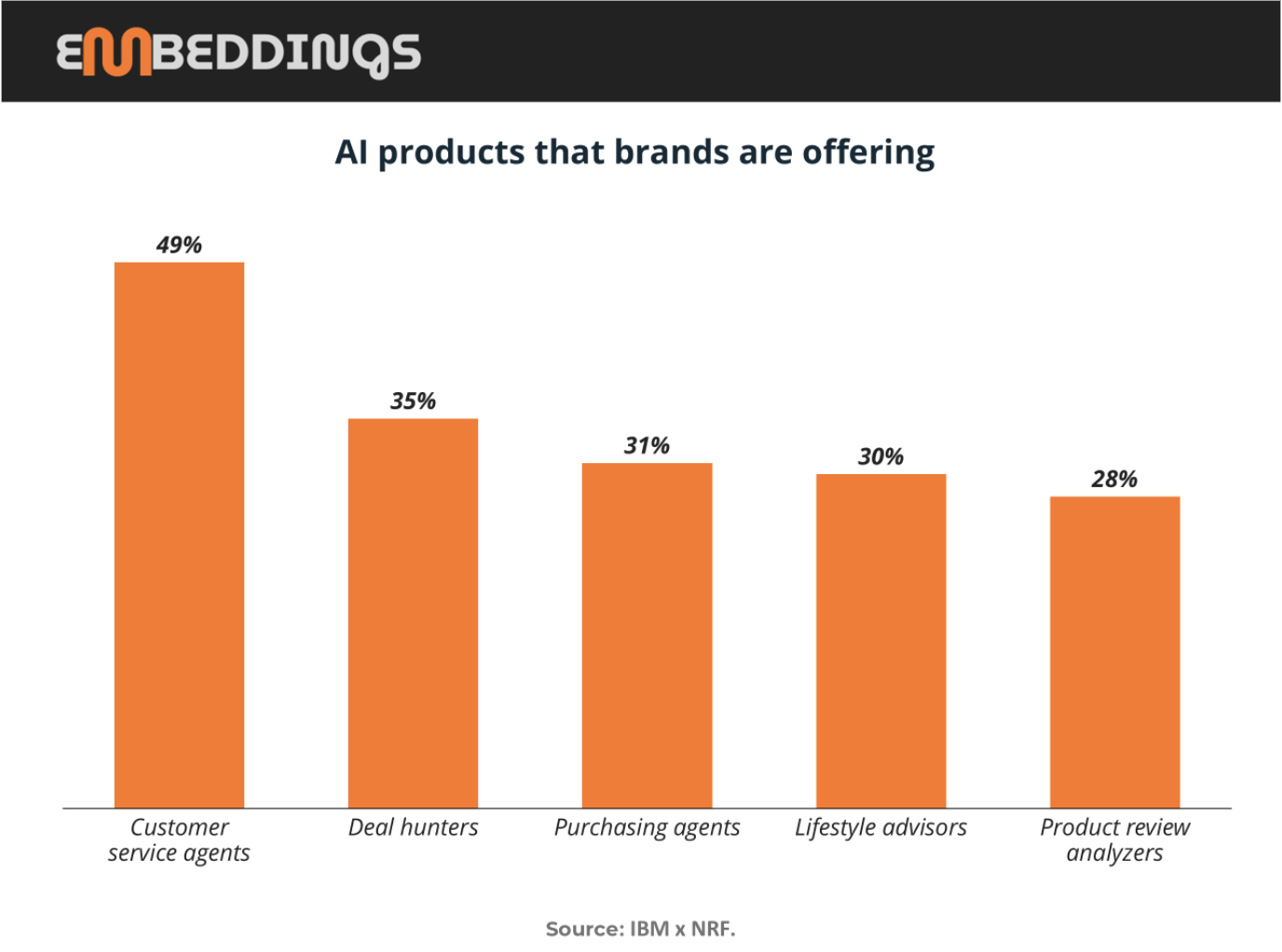
Brands and retailers are proceeding cautiously with AI agents. Nearly half (49%) of the organizations in our executive survey offer customer service agents, but far fewer are rolling out deal hunters (35%), purchasing agents (31%), lifestyle advisors (30%), or product review analyzers (28%).
Brands face common challenges in their adoption journey: 54% of executives in the study report persistent data challenges across channels. 51% say limited AI expertise is a constraint.
What makes this different from previous digital shifts: consumers aren't just searching differently, they're delegating and automating their journey. 30% want smart homes with AI personal shoppers. 29% want effortless purchasing through social platforms. The direction is toward AI agents that act on a consumer's behalf. If your brand isn't part of that conversation, literally, part of the AI's answer, you're not in the consideration set.
Source: IBM Institute for Business Value x National Retail Federation, "Brands and retailers navigate a new reality," January 2026. 18,000+ consumers, 23 countries; 200 senior retail/e-commerce executives. Survey conducted Q3 2025.
COMPANY FEATURE
Outset The Focus Group Is Dead. AI Runs the Interview Now.
Qualitative research hasn't scaled in 50 years. You either run a handful of focus groups for $50K+ and wait weeks for synthesis, or you send a survey and lose all the depth. The result: most product and marketing decisions are made on thin signal, a few dozen interviews extrapolated to millions of customers. The teams that need consumer insight the most (product, brand, CX) can't afford to wait for it.
Outset deploys AI moderators that conduct in-depth interviews , including video, at survey scale. The AI adapts in real time, probes for depth, detects fraud, and synthesizes thousands of conversations into structured reports. It supports 40+ languages. A research project that used to take a team four weeks and six figures now takes days. Microsoft, Nestlé, HubSpot, and Uber are already using it. The company just expanded from standalone research studies into always-on CX management, continuous feedback across the full customer journey, not one-off projects.
GetWhy (PeakSpan) plays in a similar space. Traditional players like Qualtrics and UserTesting haven't moved fast enough on AI-native interviews. Outset's bet is that the category itself changes, from "research tool" to "AI-native CX platform."
Founded 2022 (YC S23). $51M raised, $30M Series B led by Radical Ventures in December 2025, just six months after their $17M Series A. 8x revenue growth in 2025. Microsoft's venture fund (M12) joined in the Series B. Team led by Aaron Cannon (ex-Tesla, Pebble product lead).
Early research supports the approach. A University of Mannheim study found AI-moderated interviews produced 39% more words and 36% more unique themes than traditional surveys. A Harvard/LSE study found respondents wrote 142% more when using an AI conversational agent, and rated the experience as non-judgmental, consistent with decades of research showing people disclose more to computers than to humans. an CMOs and CPOs accept that an AI interviewer surfaces insights as nuanced as a human moderator? The early data says yes, but the cultural shift is the real bottleneck, not the technology. Worth watching closely.
Marketing Embeddings is read by 20,000+ CMOs, CTOs, and media leaders navigating AI's impact on marketing. Forward this to someone who needs to see it.