
The AI You Use vs. the AI You’re Seen Using
Good morning,
This week we’re seeing a tale of two AIs: one that’s scaling fast in public, and one that still makes people nervous in private.
The headline: Disney just licensed 200+ characters to OpenAI and dropped $1B into Sora. But behind the Hollywood deal flow, Anthropic’s new Interviewer study reveals a quieter tension—one marketers know well. People want AI to help, but not be seen using it. In Big Picture, we explore how professionals are outsourcing execution, but holding tight to judgment, identity, and taste.
Also in this issue:
Hollywood creatives launch the Creators Coalition on AI
YouTube wins exclusive rights to the Oscars, starting 2029
A new industry standard, RSL AI Licensing 1.0, aims to formalize how news orgs license content to models
And the DOE taps OpenAI, Google, and Anthropic for a national research push
One more thing: new research suggests AI systems may now consume more water than the entire bottled water industry—raising fresh questions about scale, sustainability, and transparency.
The platforms are moving fast. But trust, identity, and regulation are moving right alongside them.
- The Marketing Embeddings Team
NEWS
Disney licensed 200+ characters for Sora and put $1B into OpenAI, making Sora Hollywood-approved at scale. (Read More)
Hollywood actors and filmmakers started the Creators Coalition on AI, a new advocacy group backed by over 500 artists pushing for industry standards around consent, compensation, and deepfake protections. (Read More)
YouTube has won exclusive rights to broadcast the Oscars starting in 2029, ending decades of dominance by traditional broadcast networks like ABC. The move signals a historic shift in media economics as one of television’s biggest "tentpole" events transitions entirely to a digital platform. (Read More)
RSL AI Licensing 1.0 has been established as an official industry standard to streamline how news publishers license their content for use by AI models. The framework provides a machine-readable format to define usage rights and fees, aiming to simplify the complex legal landscape between media companies and tech firms. (Read More)
The U.S. Dept. of Energy just announced partnerships with 24 organizations to power the Trump administration’s Genesis Mission effort to accelerate scientific research with AI — including OpenAI, Google, Anthropic, and Nvidia. (Read More)
OpenAI just unveiled an expansion of its dedicated app directory inside ChatGPT, opening submissions for third-party developers while giving users a browsable hub to discover and connect integrated services. (Read More)
BIG PICTURE
The Quiet Tension Shaping AI Adoption in Marketing
One of the most revealing AI stories this week didn’t come from a product launch — it came from a conversation. Anthropic’s new Interviewer tool conducted AI-led interviews with 1,250 professionals about how they actually feel using AI at work. Not what they say publicly. What they do privately.
The takeaway for marketers is subtle but important: people are not resisting AI. They are protecting meaning.
Across roles, respondents were eager to offload execution — formatting, research, summaries, admin — but consistently held onto judgment, direction, and taste. These are the parts of work that feel personal, identity-shaping, and reputational. AI isn’t replacing them; it’s reframing where human value lives.
This tension shows up clearly when you look at current model capabilities.
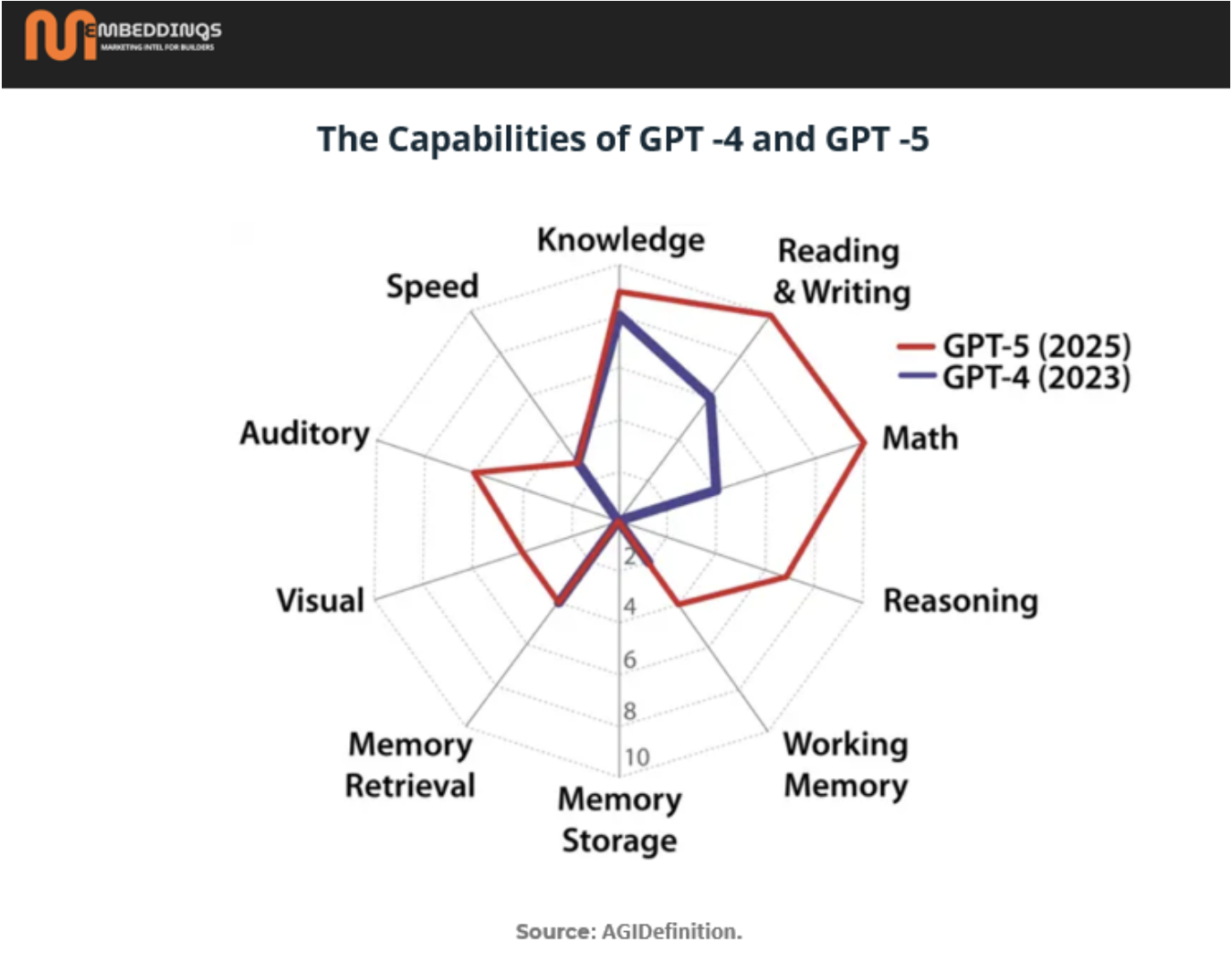
Despite dramatic gains in knowledge, reasoning, and generation speed, today’s models still show uneven cognitive profiles. They are powerful accelerators, not autonomous operators. Memory, long-term context retention, and grounded decision-making remain fragmented. That “jagged intelligence” is why humans still act as editors-in-chief rather than spectators.
Anthropic’s interviews also uncovered a social friction layer that marketers should not ignore: 69% of professionals feel uncomfortable being seen using AI at work. Many hide usage to avoid being perceived as lazy, inexperienced, or overly dependent. In practice, this creates a widening gap between private productivity and public silence.
The AGI research community offers a useful lens here. A recent multi-institution paper defines AGI not as flash or fluency, but as cognitive versatility comparable to a well-educated adult. By that standard, even advanced models remain meaningfully incomplete.
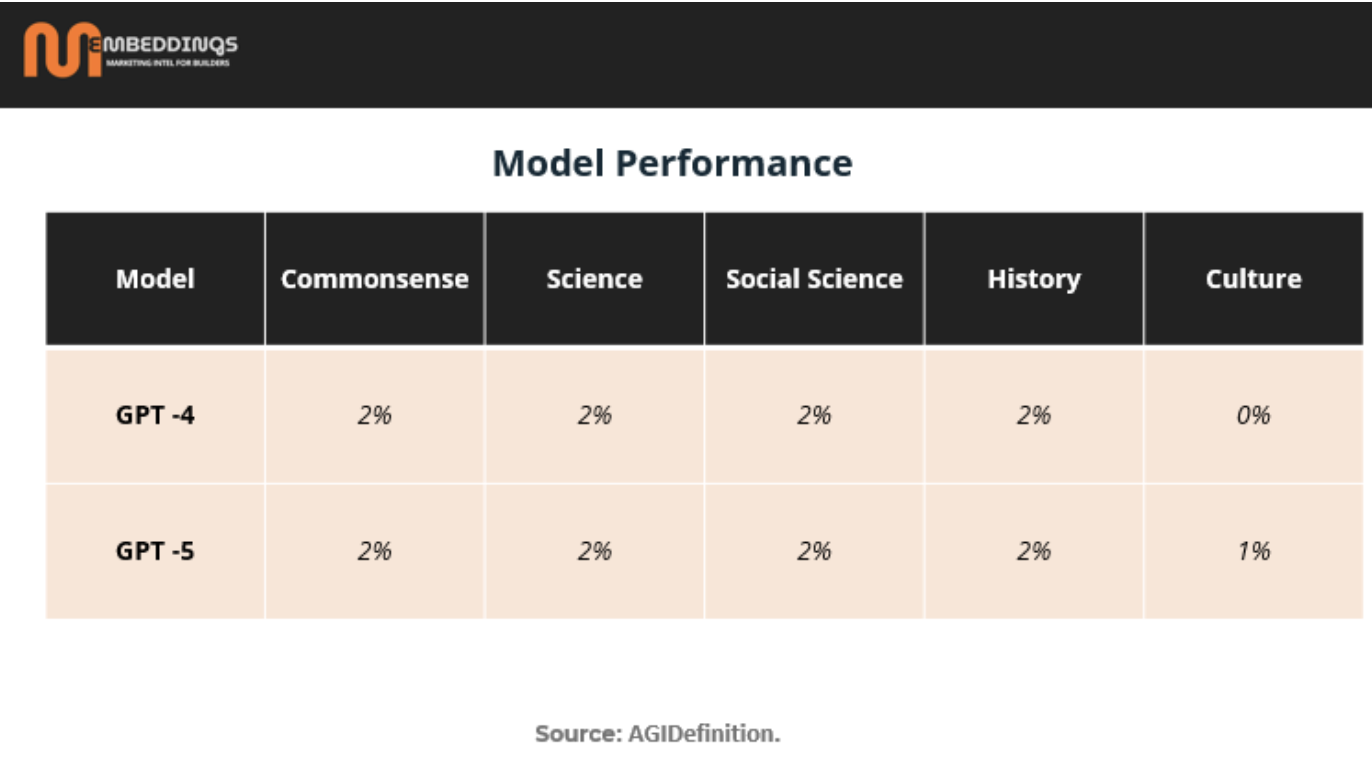
GPT-4 scoring ~27% and GPT-5 ~57% on this framework quantifies what many marketers intuitively feel: we’re in an era of orchestration, not replacement. Everyone can generate. Not everyone can decide what’s good, what’s on-brand, or what actually moves the business.
That’s the real shift heading into 2026. As AI output becomes abundant, taste becomes the differentiator. The marketers who win won’t be the ones who prompt the most — they’ll be the ones who know what not to ship.
ONE MORE THING
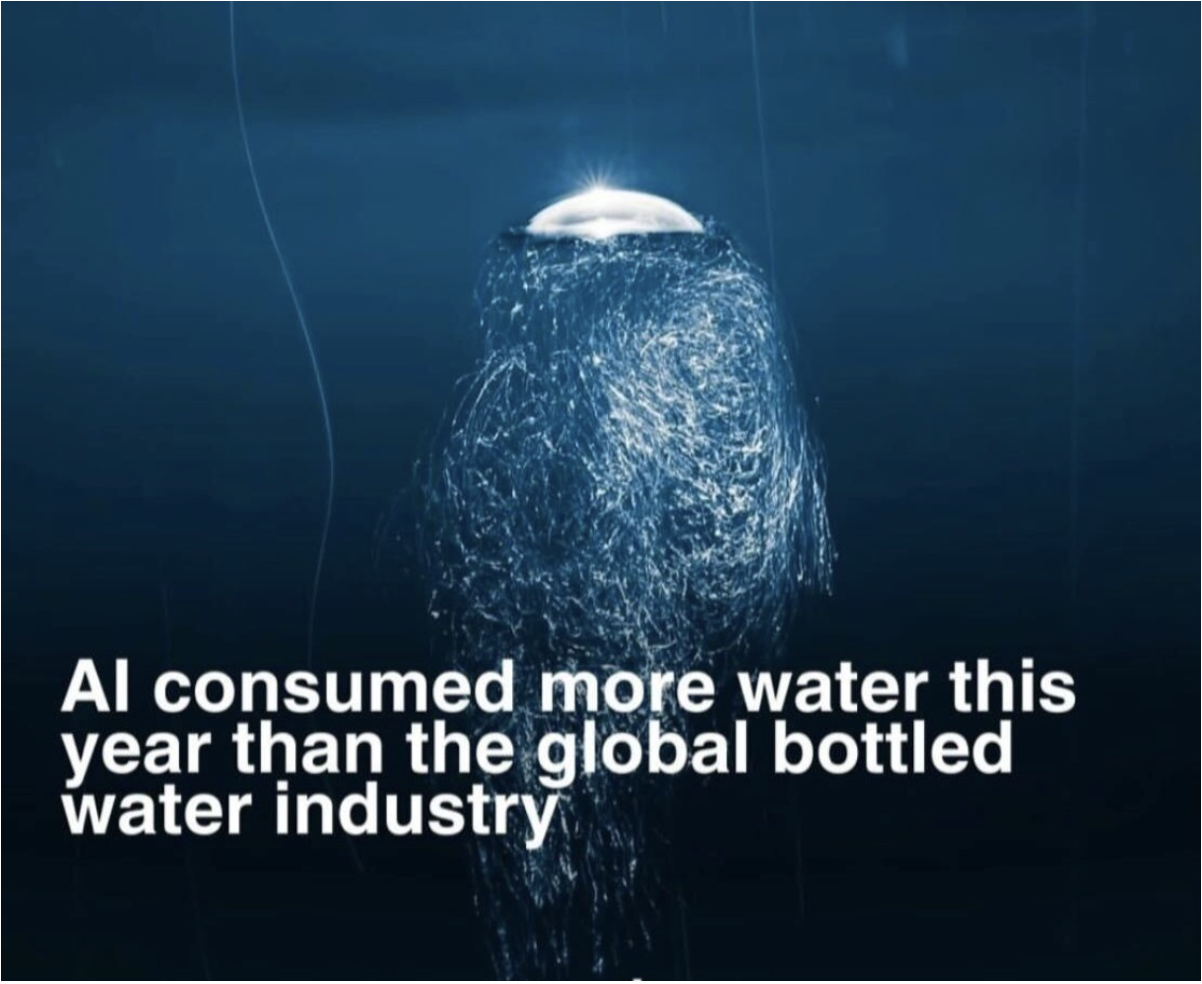
AI systems like ChatGPT may already consume more water annually than all bottled water globally, according to new research. Cooling data centers and powering AI infrastructure could be using up to 764.6 billion liters per year, with little transparency from tech firms. (Read More)
Podcast Episode: Power Ranking the Big AI Ideas for 2026
The 2026 Roadmap: Power Ranking A16Z’s Boldest AI Bets
What does the "next" version of the AI revolution look like? Andreessen Horowitz (A16Z) recently polled its partners to forecast the landscape of 2026. To separate the signal from the noise, we’ve reviewed these insights using a Power Ranking system—scoring each on Likelihood, Value, and the "X-Factor" (general disruption potential).
Here are the three pillars poised to redefine the enterprise:
1. Taming the Multimodal Chaos
Enterprises are currently sitting on a "treasure chest" of dark data—images, PDFs, and audio recordings that LLMs struggle to digest cleanly. By 2026, the focus shifts from model size to data hygiene. We expect a surge in startups building the "janitorial layer" for AI: tools that clean, structure, and validate multimodal data so it can finally be used for high-stakes decision-making.
2. Agent-Native Infrastructure
The software we use today was built for humans clicking buttons. But when the primary user of an app is an AI agent, the "plumbing" has to change. Agent-native infrastructure involves re-architecting the control plane to accommodate the high-speed, high-volume patterns of autonomous agents. This isn't just a patch; it’s a total rebuild of how permissions and workflows function in a machine-to-machine world.
3. Vertical AI Goes "Multiplayer"
Vertical AI (AI built for specific industries like Law or Construction) is evolving from a solo tool into a multiplayer ecosystem. Imagine AI agents that don't just help one lawyer, but negotiate and collaborate across different firms, managing distinct permissions and industry-specific workflows automatically.
The Bottom Line: The "X-Factor" for 2026 isn't just about smarter models—it’s about the infrastructure and collaboration layers that allow those models to finally get to work.
Would you like me to dive deeper into one of these trends and draft a strategy on how your team can prepare for agent-native infrastructure?
