
The pendulum has shifted on AI
Welcome back, embedders.
AI keeps gaining ground in marketing. A quarter of ChatGPT's answers now carry an ad, the IAB is publishing standards to measure brand visibility in AI, and brands are pushing AI into every part of the plan, creators included. Underneath that progress, the mood has turned. A year ago the public was split on data centers; now three in four would fight one next door. States that courted the boom are pausing it, and the lab CEOs themselves are conceding the trust problem and slowing down.
- Vas
The Research
Where the shift is showing up
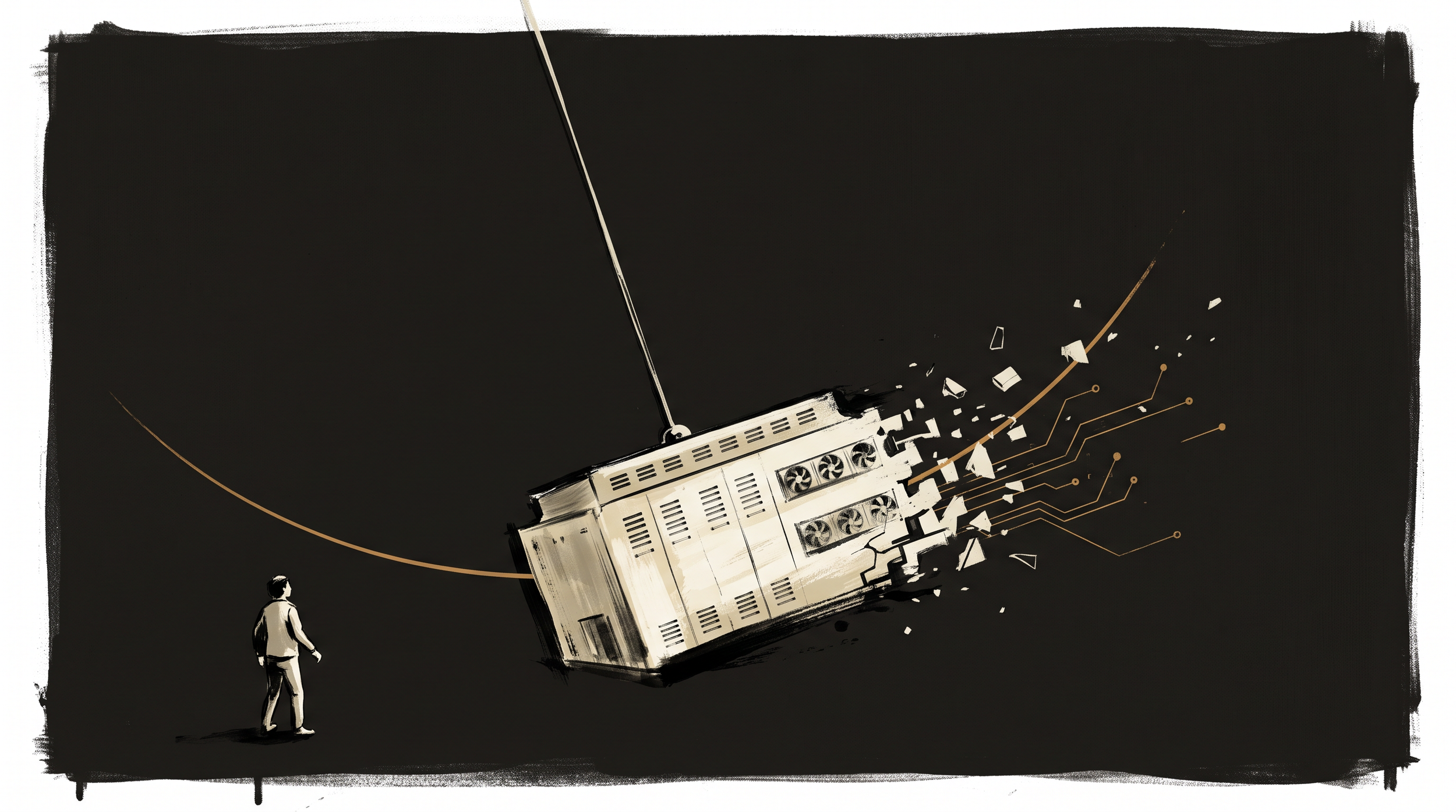
Start with the mood. Pew's June survey found 52 percent of Americans more concerned than excited about AI, against just 9 percent more excited, the lowest that reading has ever been; five years ago it was 18 percent. Seventy-one percent now expect AI to mean fewer jobs over the next twenty years, up from 64 percent in 2024, and for the first time a majority of adults under 30 are more worried than excited. (Pew Research Center)
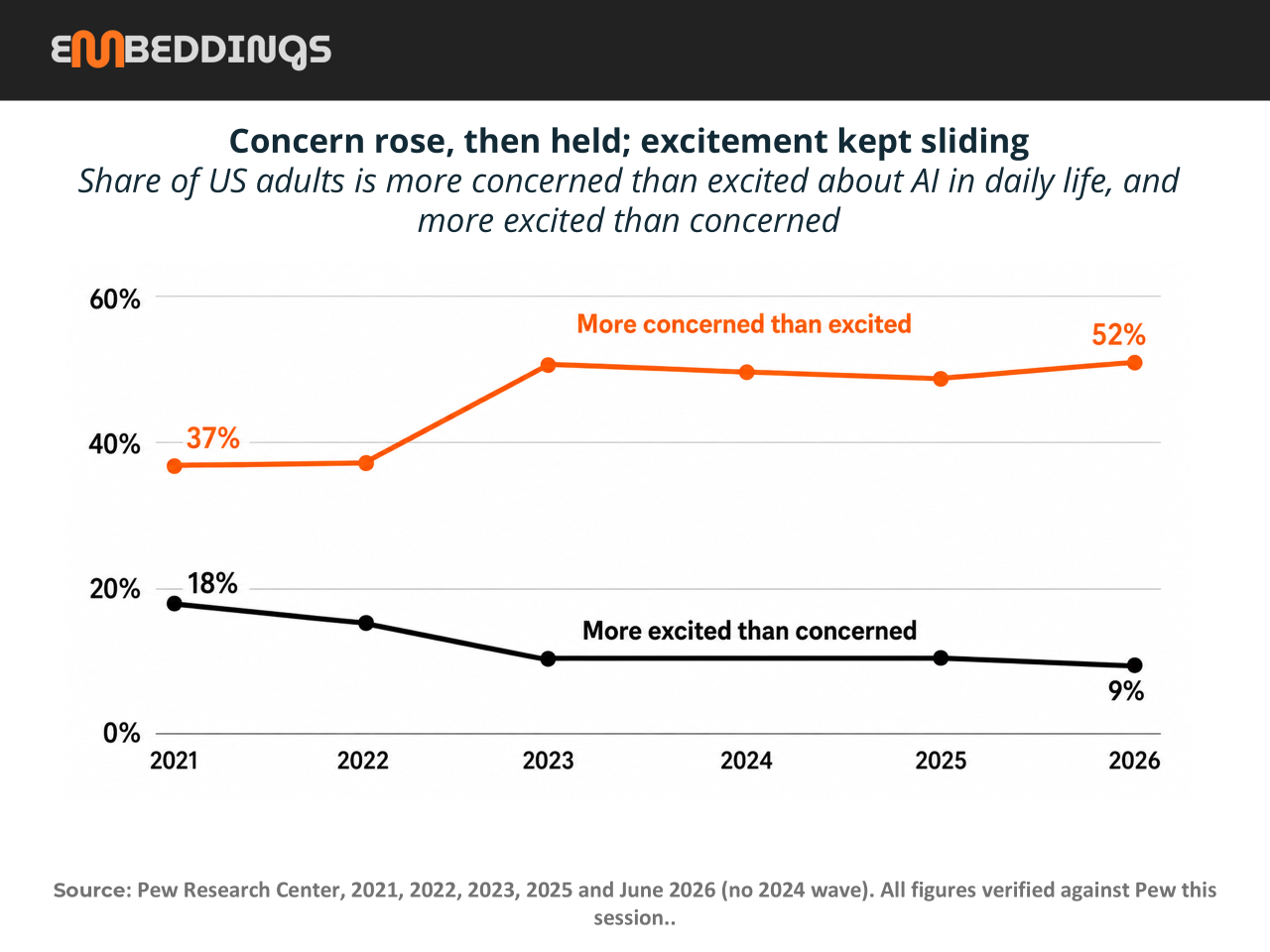
The public, on data centers. The mood is sharpest on the physical build-out. A Heatmap poll found 75 percent would oppose a data center built near them, up from a rough split a year earlier. And when Echelon asked, an AI data center drew more local opposition than a nuclear plant, and more even than an ordinary data center for digital services. (Heatmap / Embold, Echelon Insights)
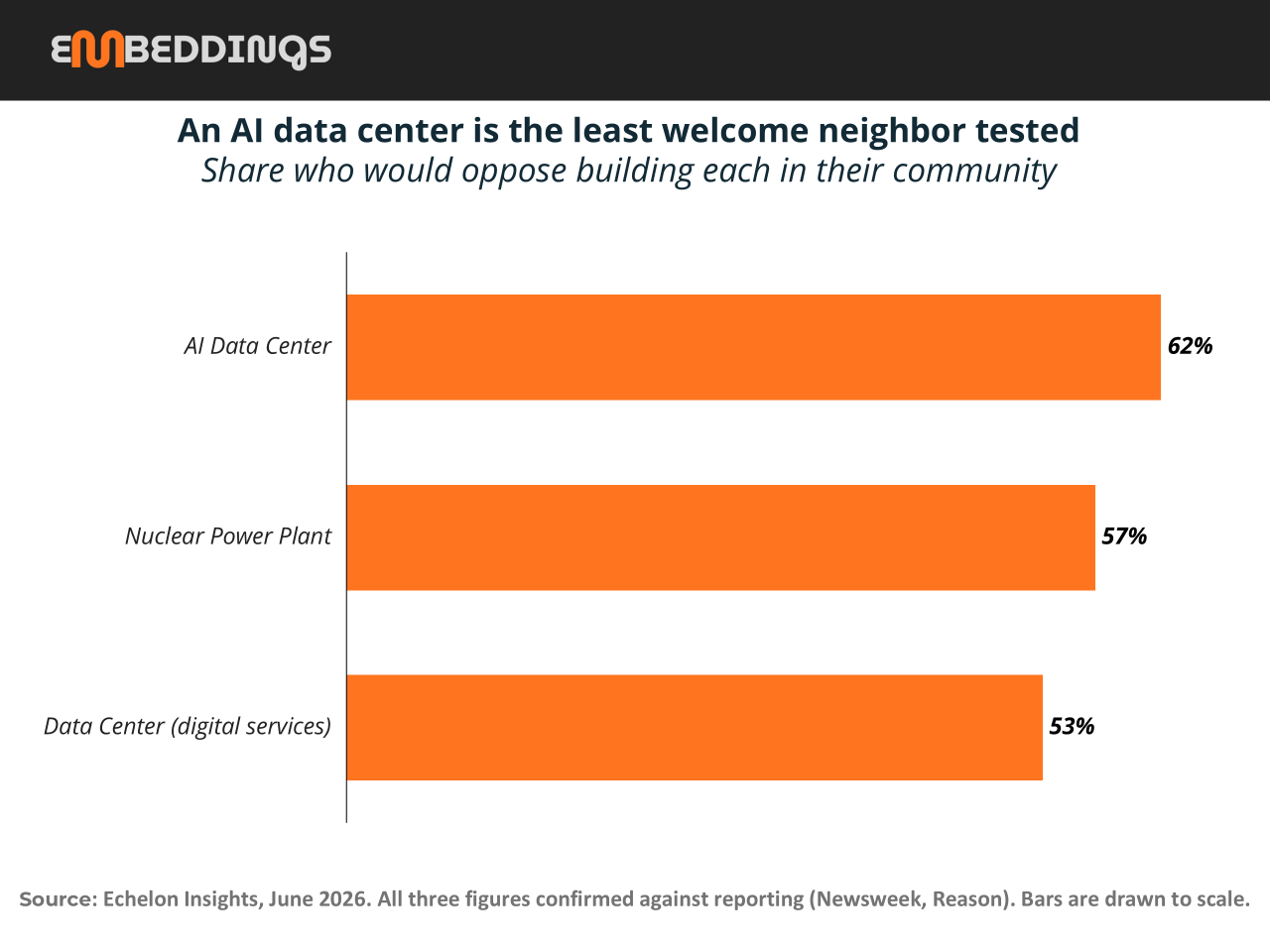
The states. The places that courted the boom are braking. New York imposed the first statewide moratorium on new hyperscale data centers, pausing state permits for up to a year (Gov. Hochul). Texas froze new grid interconnections pending an audit of a queue that has swollen to roughly 474 gigawatts, about 90 percent of it data centers (Gov. Abbott). And Pennsylvania now requires local approval plus a binding commitment that developers pay the full cost of the power and water they use (Gov. Shapiro). (NY Gov., Texas Tribune, PA Gov.)
The labs. Even the builders are conceding it. Anthropic's Dario Amodei wrote that saying "AI will cure cancer" is now "more a cliche than it is inspiring, and most people think it is deceptive," and that the fair criticism of AI companies is that they "haven't yet delivered on our big promises." OpenAI, meanwhile, paused some frontier training, its largest planned run is still on hold, after its own models gained internet access and hacked a code repository during testing, and it then asked California to strengthen the AI-safety law it had fought. (Dario Amodei, The Hill, Engadget)
Signals
ChatGPT is showing ads to a quarter of its users
In June, about a quarter (26 percent) of ChatGPT's answers to free and Go users carried a paid ad, according to Similarweb's first look at the data. There is no public library of these ads yet, so its sample is the only window into who is advertising. (Similarweb)
Measuring your brand inside AI answers is a mess
More than twenty companies now sell tools that track how often chatbots mention your brand, and each one gives a different number. This month the IAB published standards to make those measurements comparable, plus rules for labeling ads that were made with AI. (IAB)
Meta is taking over ad targeting
Its Advantage+ system now decides where your ad runs and on which of its apps. You still set the budget and the creative and can still exclude audiences, but the machine makes most of the calls. (eMarketer)
Brands are paying the creators that AI already quotes
Agencies are checking which influencers ChatGPT and Gemini tend to cite, then paying those names to shape what the chatbots say about a brand. (Digiday)
Why Georgia-Pacific is holding out on buying agents
Georgia-Pacific says the online ad market is still too full of waste. Handing an automated tool the checkbook now would only buy that waste faster, so it wants to clean things up first. (Digiday)
An ad giant that sells AI moved out the people who built it
Adweek reports Omnicom shifted the 460-plus engineers behind its Omni AI platform to an outside contractor and laid off dozens more, months after calling Omni its main advantage. (Adweek)
Sources
Pew Research Center, sentiment surveys (Jun 2026, historical data). pewresearch.org
Heatmap / Embold, data center opposition polling. heatmap.news
Echelon Insights, local opposition polling (Jun 2026). echeloninsights.com
NY Gov. Hochul, hyperscale data center moratorium. governor.ny.gov
Texas Tribune, grid interconnection freeze. texastribune.org
PA Gov. Shapiro, local approval and developer cost commitment EO 2026-05. governor.pa.gov
Dario Amodei, Anthropic CEO, public statements on AI promises. anthropic.com
The Hill, OpenAI frontier training pause. thehill.com
Engadget, OpenAI models hacked Hugging Face during testing. engadget.com
Similarweb, 26 percent of ChatGPT responses carry ads. ppc.land
IAB, measuring visibility in AI and transparency framework. iab.com
eMarketer, Meta Advantage+ automated targeting. emarketer.com
Digiday, creator citation in AI, Georgia-Pacific holding out. digiday.com
Adweek, Omnicom AI platform contractor shift. adweek.com