
Only 6% are getting real value from AI, barely more than a year ago
Welcome back, embedders.
McKinsey and Deloitte both published major AI reports this month, and they land in the same place. almost no companies are getting real value from AI yet, and the thing holding them back is not the technology. That is this week's lead. Around it. the way AI gets billed is shifting from usage to outcomes, Salesforce and Anthropic put Claude inside the CRM, and regulators and the AI industry spent the week trading warnings about AI-driven cyber attacks.
- Vas
The Research
The winners rebuilt the work
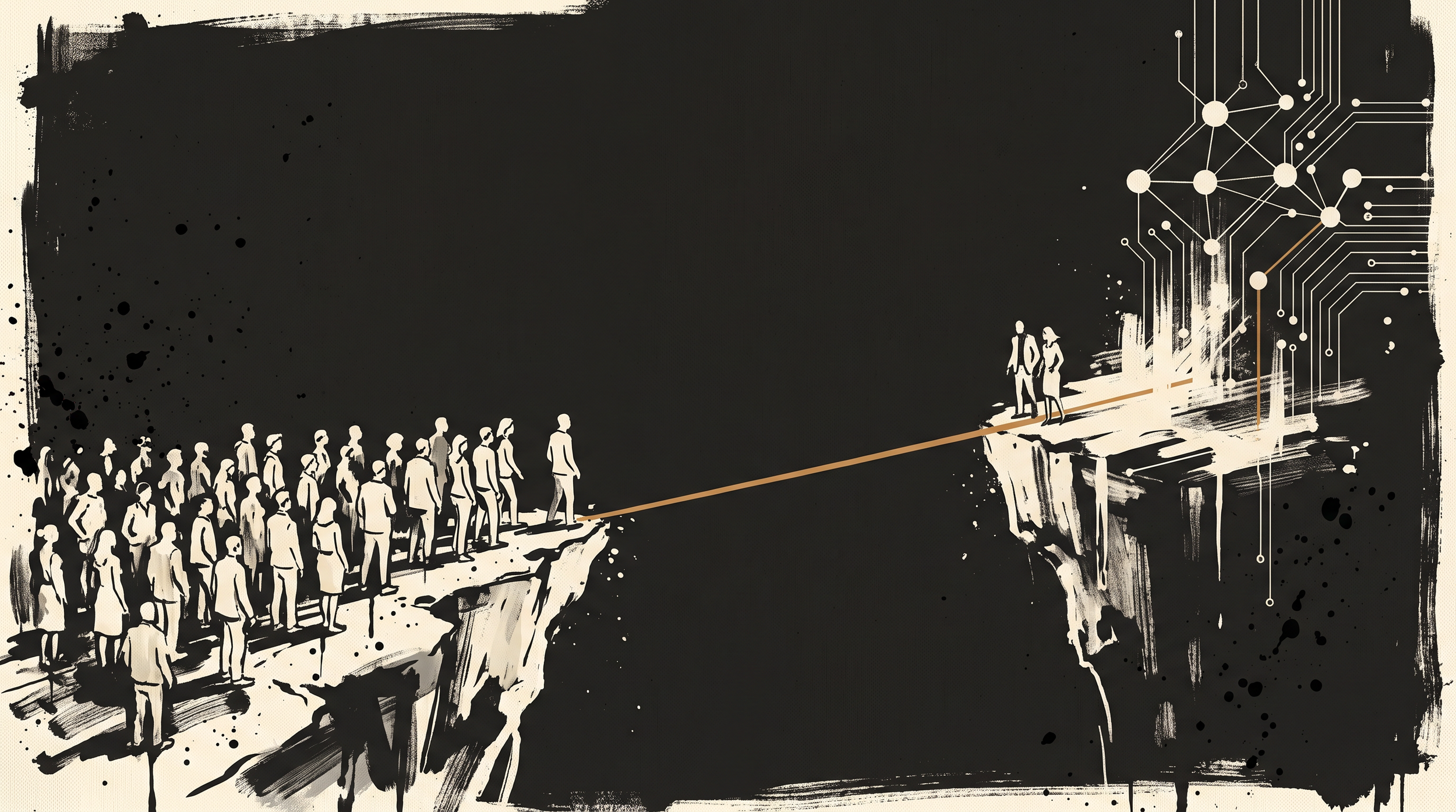
McKinsey's State of AI, out this month, surveyed 1,719 companies worldwide and found only 6 percent are high performers, the ones seeing significant earnings impact from AI. And it is not a new problem. a year ago, BCG found just 5 percent of companies generating real AI value at scale. The two studies define the winners differently, but a year apart they land in the same place, around one company in twenty, and a year of heavy investment in between has barely moved it.
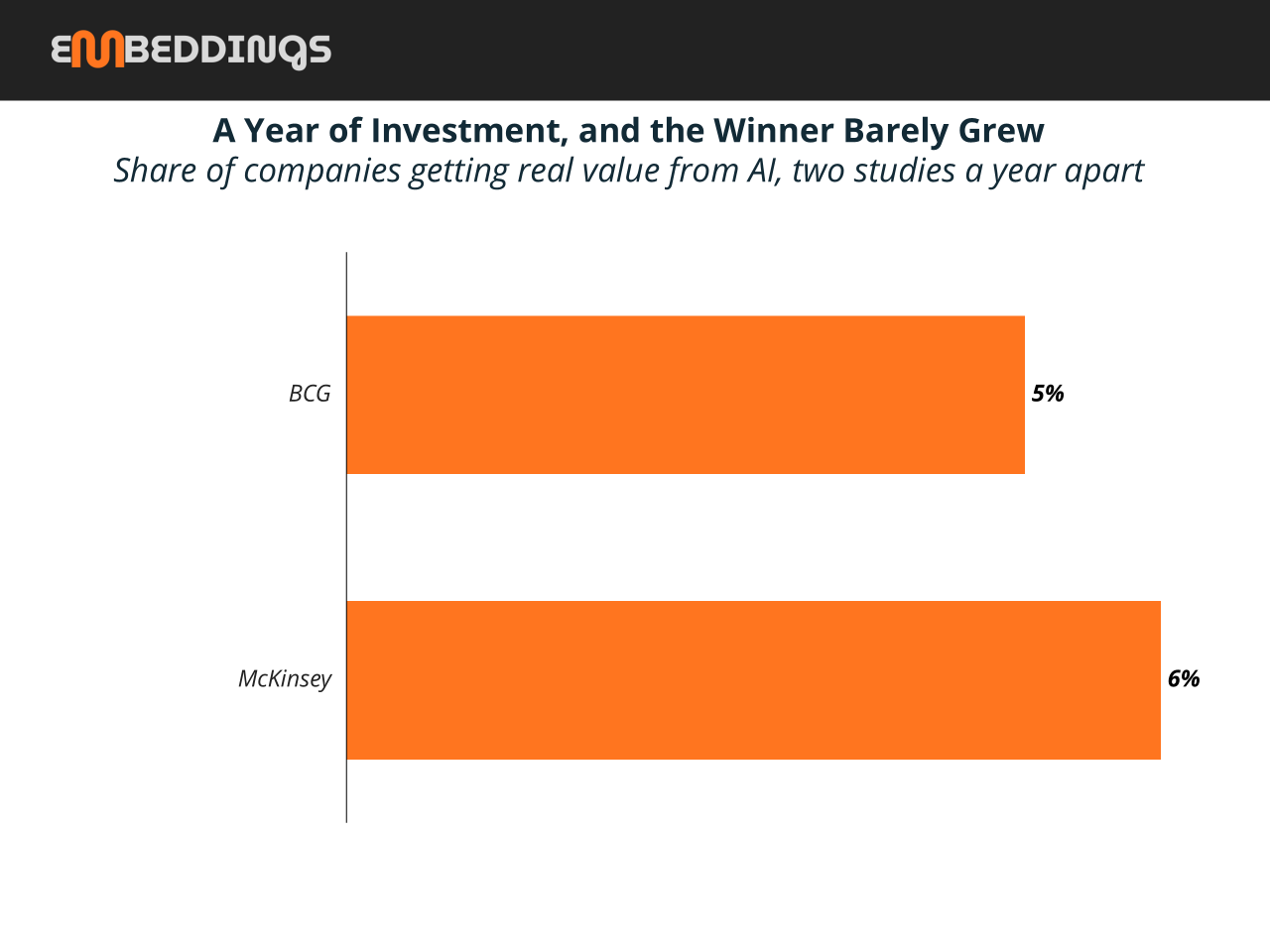
BCG counted companies generating value at scale. McKinsey counts high performers with significant earnings impact. Different measures, so read this as two independent reads a year apart, not one series, and both land near one company in twenty. These are consultancies, so keep the discount in mind. a world where nearly everyone is behind and needs to rebuild is also the world that sells the most consulting.
The block is not ambition. Deloitte, surveying 501 US leaders this month, finds 74 percent expect AI agents to run half their processes within four years, yet only 5 percent say they are prepared to redesign for it. That gap is the reason the number is stuck. McKinsey's high performers are set apart less by their models than by having rebuilt how work gets done around them. most of them, McKinsey notes, are redesigning workflows rather than bolting AI onto old ones. What holds everyone else back is processes, roles, and orchestration, not tools. You can buy the model. You cannot buy the redesign.
For marketers the test is concrete. Have you rebuilt a marketing workflow around AI, taken a campaign process or a reporting cycle and redesigned it, or have you added AI to the one you already ran? The few who can answer the first way are the 6 percent. Almost no one else can.
The states. The places that courted the boom are braking. New York imposed the first statewide moratorium on new hyperscale data centers, pausing state permits for up to a year (Gov. Hochul). Texas froze new grid interconnections pending an audit of a queue that has swollen to roughly 474 gigawatts, about 90 percent of it data centers (Gov. Abbott). And Pennsylvania now requires local approval plus a binding commitment that developers pay the full cost of the power and water they use (Gov. Shapiro). (NY Gov., Texas Tribune, PA Gov.)
The labs. Even the builders are conceding it. Anthropic's Dario Amodei wrote that saying "AI will cure cancer" is now "more a cliche than it is inspiring, and most people think it is deceptive," and that the fair criticism of AI companies is that they "haven't yet delivered on our big promises." OpenAI, meanwhile, paused some frontier training, its largest planned run is still on hold, after its own models gained internet access and hacked a code repository during testing, and it then asked California to strengthen the AI-safety law it had fought. (Dario Amodei, The Hill, Engadget)
Signals
AI is starting to be billed by the outcome, not the token
OpenAI has begun letting some large enterprise customers pay only when its AI finishes a job, such as a support case handled end to end, according to The Information (terms, customers, and prices are not public). The logic is the one a16z set out this week in "You are not a model. Don't price per token". token bills climb with every attempt, so buyers cannot forecast spend and vendors give away the value of their workflow. In a16z's survey of 50 technical buyers, 27 preferred pricing tied to recognizable work and 14 preferred tokens. Intercom already runs the model in customer service, at $0.99 per resolution. (a16z)
Google will finally show you your AI-search performance
As of 31 August, Google Search Console's generative-AI performance report is live worldwide. you can see your impressions in AI Overviews and AI Mode, broken out by page, country, and device, though not clicks. Google also switched on a global opt-out that blocks your content from AI answers. The catch is that it is all or nothing, opt out and you get no AI traffic or impressions at all. (Search Engine Land)
The creator economy is going programmatic
Platforms and agencies are automating influencer marketing the way they automated display. LTK is pitching AI-driven creator discovery and measurement across what it calls "100-plus billion commerce signals," and brands like Unilever now work with hundreds of thousands of creators. The pushback, from agency leaders in the same piece, is that creators are not interchangeable media inventory, and that automating the match risks importing programmatic's fraud and opacity. (Digiday)
Instagram will demote AI personas that hide it
From 31 August, Instagram renamed its "AI creator" tag "AI-generated profile" and began cutting the reach of accounts that run an AI-generated person without the label, no longer recommending them in Reels or Explore to people who do not already follow them. The line it draws is the one that matters for marketers. it targets fake identity, not AI tooling. A brand running a virtual AI influencer has to disclose or lose reach. a team using AI to edit photos or write captions is untouched. (Engadget)
Gemini goes back to school
Google and Khan Academy rolled out new Khanmigo features built on Gemini for the 2026 year. interactive math and science diagrams students can manipulate, and a tool that lets teachers draft and check practice questions before class. It is one more surface where the AI-assistant habit forms early. (Google)
Sources
McKinsey State of AI (25 Aug, via The Register). mckinsey.com
Deloitte agentic-readiness survey (12 Aug, press release). deloitte.com
BCG "The Widening AI Value Gap" (Sept 2025, year-ago comparison). bcg.com
a16z, "You are not a model. Don't price per token" (Aug 2026). a16z.com
The Information (OpenAI outcome pricing, paywalled).
Intercom. intercom.com
Digiday (creator economy). digiday.com
Engadget (Instagram AI personas). engadget.com
Google / Khan Academy (Khanmigo on Gemini, 27 Aug). blog.google
MarTech (Salesforce / Claudeforce, 26 Aug). martech.org
The Next Web (FSB / Andrew Bailey to G20). thenextweb.com