
Is AI actually maturing, or just spending more?
Welcome back, Embedders. The industry is in Cannes this week, rosé in hand, and the festival's own program shows where marketing AI is heading. The headline has moved from generative to agentic: OpenAI, Google DeepMind, and Meta on the main stage, Higgsfield's agents running entire campaigns out on Miramar Beach, and a new Creative Brand Lion that rewards the internal system that produces the work rather than a single ad. The same pattern runs through this week's lead, a new study of 400,000 coding sessions: value is moving to whoever builds and steers the capability, not whoever makes the one good thing.
The failure modes are arriving alongside it. News this week shows that TikTok's feed is now mostly AI junk, and that a new Wharton study found people accept wrong AI answers most of the time while feeling more confident, not less.
Capable AI is here. Whether it becomes progress or motion turns on someone keeping judgment in the loop on the demand side, where the work gets directed. The people who get value from these tools are the ones who steer them. Most of this week is what happens when nobody does.
- Vas
Signals: AI and Marketing
TikTok's default feed is now mostly AI slop
TNW, citing Kapwing · June 21, 2026
59 percent of videos shown to new TikTok accounts are AI-generated junk, about three times YouTube's rate, so brand content competes against an ocean of synthetic filler and authenticity becomes the scarce signal.
thenextweb.com/news/tiktok-ai-slop-59-percent-new-users-kapwing-study
WPP's agentic-buying bet is governance, not the agent
Digiday · June 19, 2026
WPP launched a Buyer Agent for Video with a media-owner coalition but kept humans signing off on every spend, selling the audit trail and approval threshold rather than the automation itself.
digiday.com/media-buying/humans-at-the-helm-agents-in-the-loop-wpp...
L'Oréal plugs OpenAI into its creative factory
Digiday · June 19, 2026
L'Oréal added OpenAI to a multi-model production stack, claims a 40 percent cut in production cost, and is feeding its own product data to ChatGPT to shape how it shows up in AI answers.
digiday.com/marketing/loreal-accelerates-generative-ai-content-engine-with-fresh-openai-deal
From Cannes
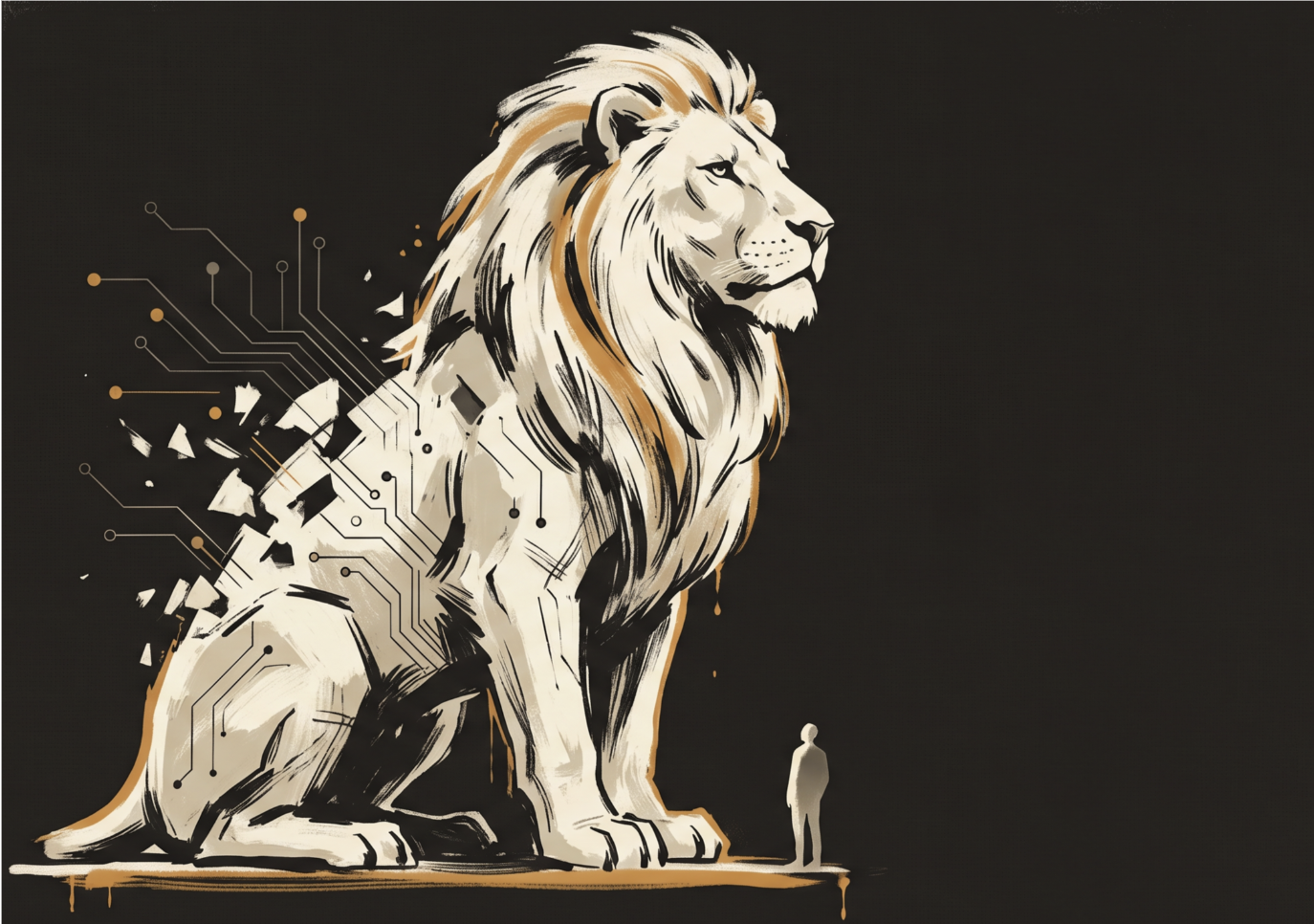
Cannes opens, and the headline already moved from generative to agentic
Cannes Lions / PRWeek · June 22, 2026
The festival (June 22 to 26) is built around the shift from tools that create to systems that plan, act, and optimize, with OpenAI, Google DeepMind, and Meta on the main stage and a Demis Hassabis fireside. The new Creative Brand Lion underlines the same move: it rewards the internal systems and culture that produce great work, not the single standout campaign.
prweek.com/article/1961318/2026-cannes-lions-ai-creators-sports-ready-center-stage
On the beach, agents are already running the campaign
NVIDIA · June 22, 2026
NVIDIA's partner showcase puts agentic marketing in production: Higgsfield's agents run the full lifecycle from ideation to autonomous optimization for nearly 400 Fortune 500 firms, AWS demoed AI bidding inside the ad auction, and Criteo reports a roughly 2x training speedup on Blackwell. The pitch is end-to-end delegation, the same pattern that raises both value and the bill.
blogs.nvidia.com/blog/nvidia-ai-marketing-advertising-cannes-lions
Signals: AI
The surveillance you build becomes the breach you suffer
TNW · June 20, 2026
Hackers dumped 45GB of Madison Square Garden data, including facial-recognition logs on up to 26 million visitors, proving that the troves firms amass to watch customers are exactly what attackers want.
thenextweb.com/news/shinyhunters-madison-square-garden-45gb-data-leak-facial-recognition
Wharton names "cognitive surrender"
TNW, citing Shaw and Nave · June 20, 2026
People accepted wrong AI answers 80 percent of the time while feeling more confident, judgment eroding exactly where capable AI most needs it.
thenextweb.com/news/wharton-cognitive-surrender-ai-chatbots-decisions-moot-app
Amazon shelves its finished Altman film
TNW, citing Variety and Deadline · June 19, 2026
Amazon dropped an unflattering, well-tested Altman film four months after a 50 billion dollar OpenAI investment, a preview of what happens when one firm owns the infrastructure, the capital, and the content.
thenextweb.com/news/amazon-drops-artificial-sam-altman-openai-film-guadagnino
The research: is AI maturing, or just spending more?
Watch the work, not the technology
A better test than vibes: watch the work, not the technology. A field matures when the tasks people trust to the tools get harder and more valuable, and when success starts to track judgment over novelty. Anthropic's June 2026 study of roughly 400,000 Claude Code sessions tests both.
Source: Anthropic, "Agentic Coding and Persistent Returns to Expertise," June 2026. anthropic.com/research/claude-code-expertise
First, what the work became. The share of sessions fixing broken code fell from 33 to 19 percent, while operating software rose from 14 to 21 and writing and analysis together roughly doubled to about 20. Repair gave way to running, analyzing, and producing. That reads as maturity, not churn, because fixing tops out at "back to working" while the rest extends what the work can do. The rise of analytical work cuts both ways, though: it is value if the analysis drives a decision, overhead if it is only more dashboards nobody acts on, and the data cannot yet tell which. Anthropic estimates the average session's value rose about 27 percent, though it calls the figure coarse and directional.
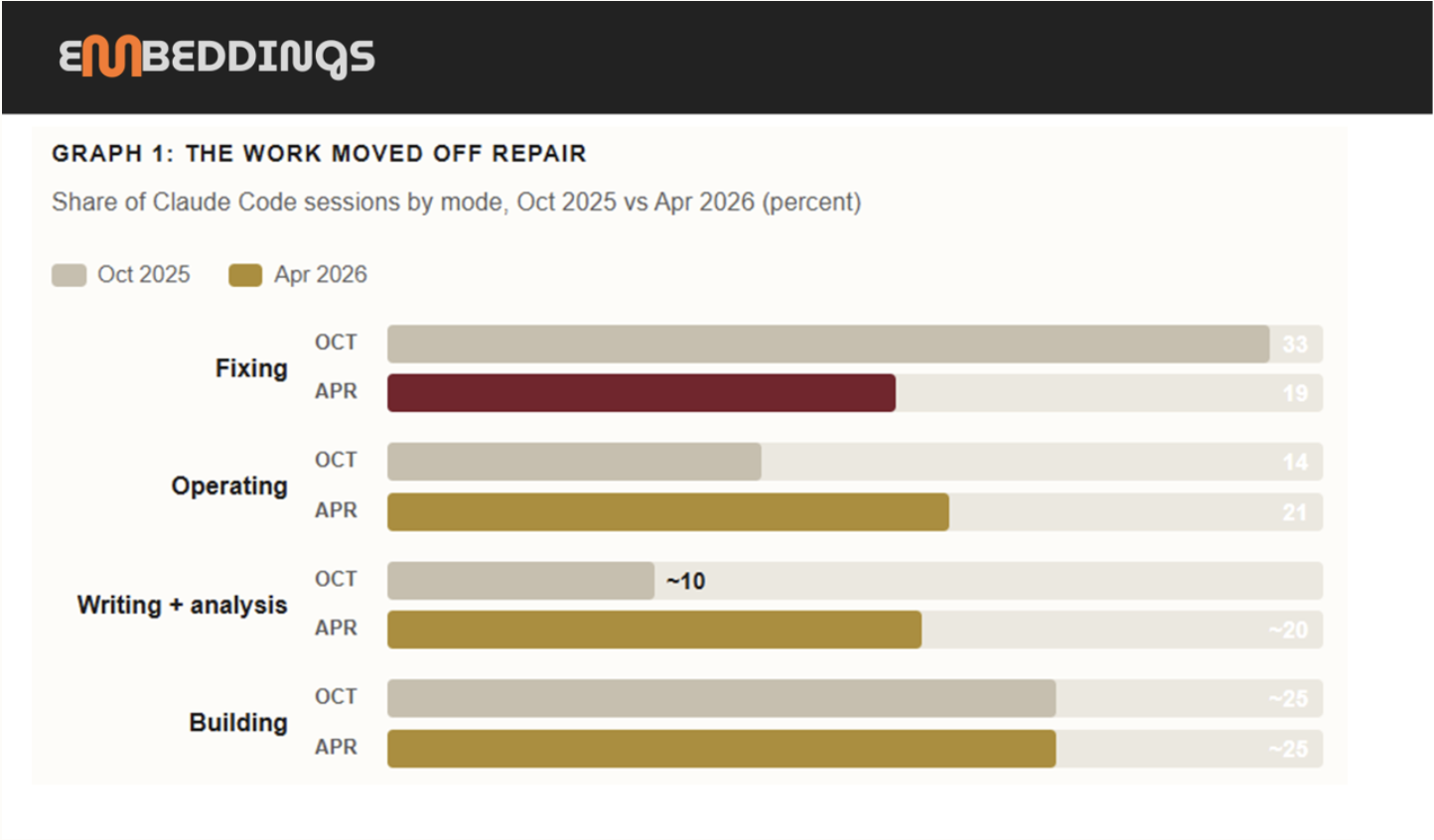
Repair fell 14 points while operating, writing, and analysis absorbed the shift. Building held roughly flat near a quarter of all sessions. Source: Anthropic, June 2026.
Second, who succeeds. Success rates rose over the period, and management occupations posted the highest verified success, slightly above software engineers. The implication: directing an agent, deciding what to build and what counts as done, may transfer better than coding fluency. But the data is thin and Anthropic says so. Success leans partly on users confirming they got what they wanted, and managers may be likelier to say so. There is no success-over-time chart, and no separation of model gains from task mix from user learning. Real signal, lightly evidenced.
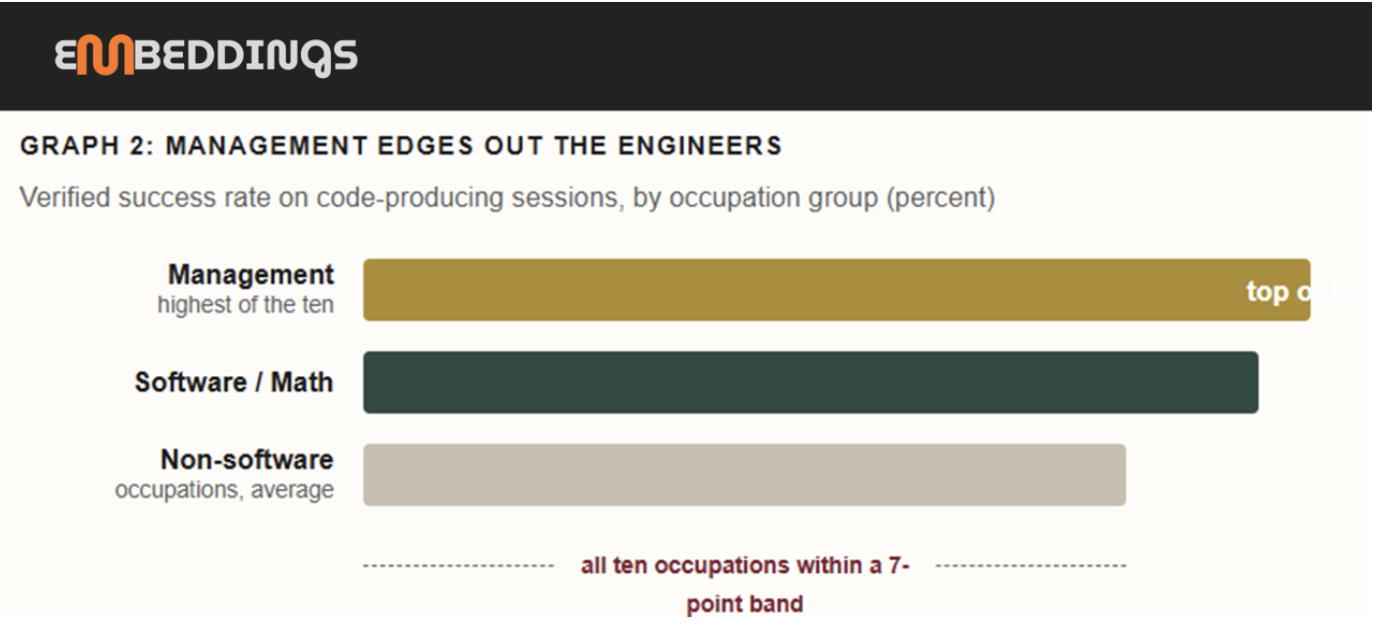
Management lands on top, software and math at about 34 percent, non-software occupations at 29 percent on average, and every one of the ten largest occupations falls within seven points of software engineers. Anthropic did not publish an exact rate for each occupation, so the management bar marks position, not a precise value. Source: Anthropic, June 2026.
Both point back to the bill. Total AI cost is seat cost plus usage cost, and usage cost is cost per token times tokens per task times number of tasks. End-to-end work burns more tokens per task than a quick fix, and spreads across more of the organization, so task count climbs too. Progress and cost are one event seen from two sides: the work got more ambitious, so value rose and the bill rose with it. What separates winners is judgment, matching the depth of delegation to the value of the outcome, so a rising bill buys progress instead of motion. That is the cost engineer's job.
Marketing Embeddings. Plain prose, named sources, no conclusions we cannot defend.
Sources
Anthropic, "Agentic Coding and Persistent Returns to Expertise," June 2026: anthropic.com/research/claude-code-expertise
TikTok AI slop (TNW / Kapwing): thenextweb.com/news/tiktok-ai-slop-59-percent-new-users-kapwing-study
WPP Buyer Agent and governance (Digiday): digiday.com/media-buying/humans-at-the-helm-agents-in-the-loop-wpp...
L'Oréal and OpenAI (Digiday): digiday.com/marketing/loreal-accelerates-generative-ai-content-engine-with-fresh-openai-deal
Cannes Lions 2026 programme and agentic shift (PRWeek): prweek.com/article/1961318/2026-cannes-lions-ai-creators-sports-ready-center-stage
Creative Brand Lion and AI Craft categories (Haute Living): hauteliving.com/2026/06/cannes-lions-2026-introduces-the-creative-brand-lion-and-goes-all-in-on-ai
NVIDIA at Cannes Lions 2026 (NVIDIA): blogs.nvidia.com/blog/nvidia-ai-marketing-advertising-cannes-lions
Madison Square Garden data leak (TNW): thenextweb.com/news/shinyhunters-madison-square-garden-45gb-data-leak-facial-recognition
Wharton "cognitive surrender" (TNW): thenextweb.com/news/wharton-cognitive-surrender-ai-chatbots-decisions-moot-app
Amazon drops "Artificial" (TNW): thenextweb.com/news/amazon-drops-artificial-sam-altman-openai-film-guadagnino
