
AI vs the internet. Triple the profit, in half the time
Welcome back, embedders,
This week we start with the big picture, and a favor I want to ask. Everyone has been asking whether AI is bigger than the internet or smaller. Bain has now put the first real estimate against it: $4.7 trillion of corporate profit in play over ten years, against $1.4 trillion that the internet moved over twenty. Now the favor:
If only one of these landed in your inbox each week, which should it be?
Headlines →
One line each, marketing and AI, the whole week scannable in a minute.
Synthesis →
Several stories read together, and what they add up to.
One insight per report →
The single number worth knowing from each big study, rather than a summary of the study.
Company breakdowns →
What one brand or vendor is actually doing, in detail.
Charts you can steal →
Built so you can drop them straight into your own deck.
The long argument →
One idea taken seriously, at length.
- Vas
The big picture
AI vs the internet. Triple the profit, in half the time
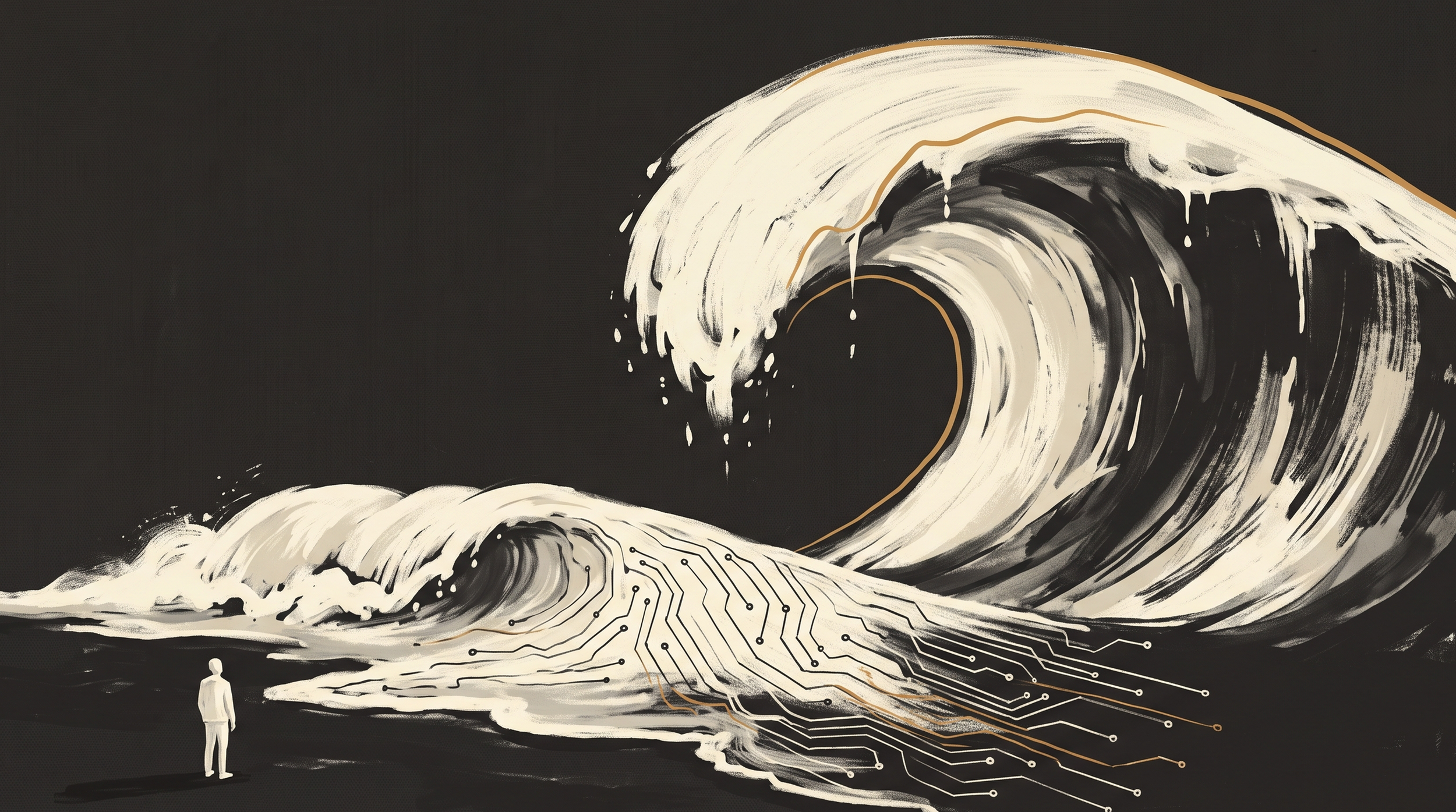
Everyone has been asking the same question since 2023, usually over drinks and without much to go on. Is this bigger than the internet, or smaller? Bain has now put a first estimate against it.
Its answer: AI puts $4.7 trillion of corporate profit in play between 2025 and 2035, against $1.4 trillion that the internet moved across the twenty years from 1995 to 2015. More than triple the profit, over half the timespan.
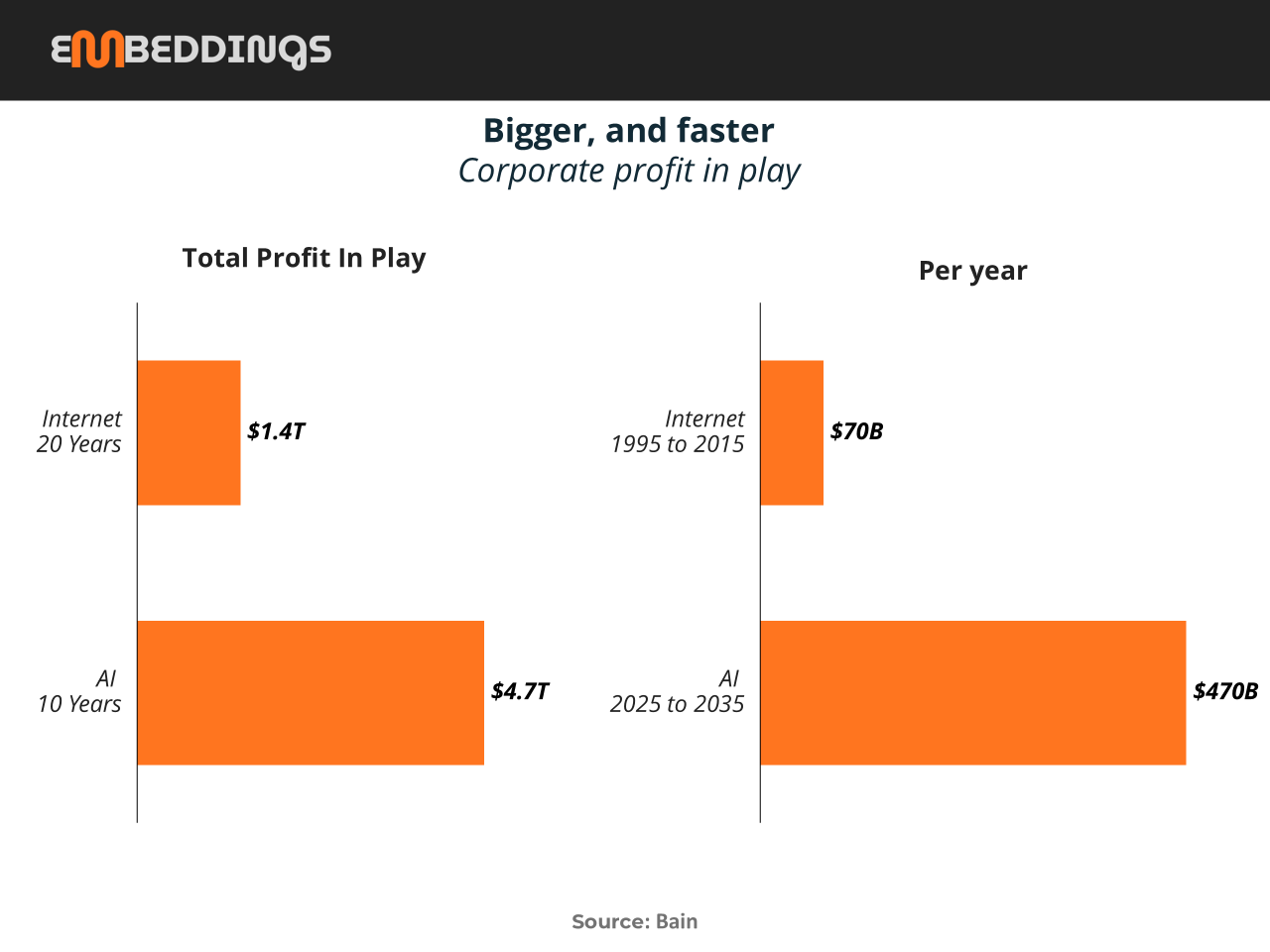
The per-year view is the one that should change a plan. Triple the size is a bigger prize. Triple the size in half the time is a different problem, because it means roughly six and a half times the annual rate of profit moving between companies, and the reaction time to notice it moving away from you shrinks with it.
Bain also expects AI to structurally transform 71% of sectors, against 41% for the internet. Fewer places to sit this one out.
Then there is how the $4.7 trillion divides. Innovation accounts for $2.2 trillion, market share shifts for $1.3 trillion, and productivity for $1.1 trillion. Almost every AI program a marketing organization is running right now is a productivity program: faster briefs, faster asset variants, faster reporting. That is the smallest of the three pools, and the one where the gains are easiest for a competitor to copy. The larger two are growth work.
Bain modelled 92 sectors and validated the framework against observed profit outcomes across 91 sectors from 1995 to 2015. It is a forecast, and a consultancy's forecast at that, so hold the precision loosely. Hold the proportions more tightly.
Economic Models
Anthropic's model. The more AI delivers, the smaller labor's share of it
Anthropic published its economic model openly and let the public argue with it. Three scenarios for the US economy in 2030, and the interesting result is not the growth. It is who ends up holding it.
Today a dollar of output splits roughly 60 cents to workers and 40 cents to capital. In the modest scenario, where AI lands about as the internet did, that barely moves and unemployment stays inside its historical range. In the extreme scenario, GDP is a third larger, knowledge-worker wages fall by more than 10%, unemployment "could spike to historic levels," and capital takes 54.8 cents of every dollar.
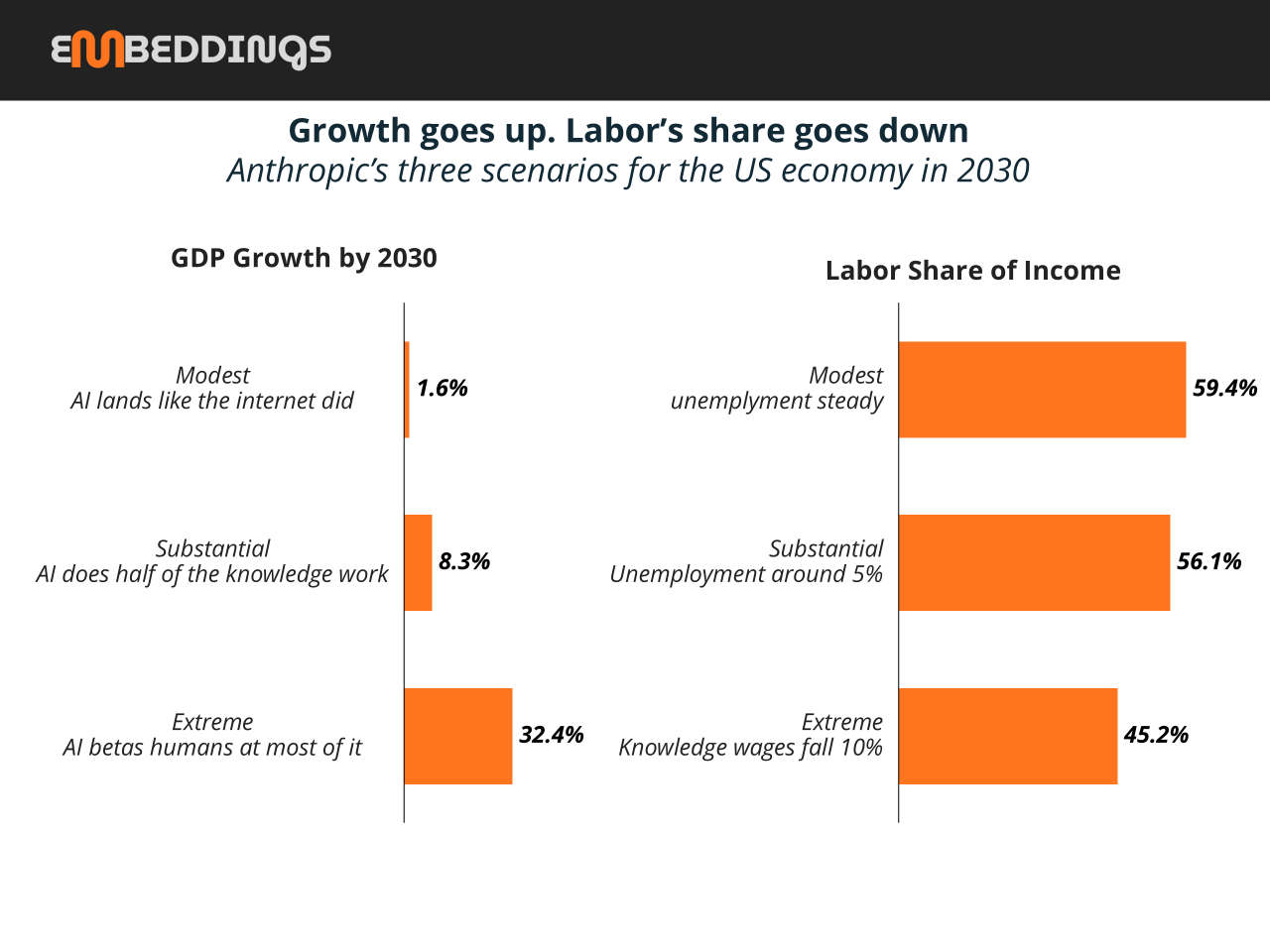
Both panels are Anthropic's figures, on a zero baseline. The stronger the AI scenario, the larger the economy and the smaller the workers' share of it. Anthropic gives an unemployment number only for the middle case, around 5%; the other two are described in words.
Of 10,980 members of the general public surveyed, the typical set of answers implies the substantial scenario. That is the middle column: a noticeably bigger economy, around 5% unemployment, and knowledge workers standing still while everyone else moves up.
Anthropic is direct about what the model leaves out, and it leaves out the things that would matter most. No policy response, no business cycles, no demand shocks. Read it as a map of where the pressure goes, not a forecast.
AI and marketing
OpenAI's next ad format sends the click to a chat, not to your site
Clicking a "Chat with us" button opens a branded conversation with the advertiser's own agent inside ChatGPT, instead of sending the user to the advertiser's website. It is in pilot with a small number of brands. OpenAI declined to comment on specifics.
Ad forecasts went up. The machine-directed share went up faster.
The IAB raised its 2026 US ad growth estimate from 9.5% to 12.3%. Madison & Wall has global growth at 11% and total spend above $1.3 trillion. Underneath that, AI-directed spending now accounts for 12% of US ad spend, up from 2% in 2023, and Madison & Wall projects $158 billion, or 27% of the US market, by 2030.
The revised forecasts, on Digiday →
In case you missed it. Google is auto-migrating Search campaigns to AI Max this month
Campaign-level broad match and legacy automatically created assets are being migrated through September, in place, without advertisers opting in. Brand inclusions and exclusions carry over. Dynamic Search Ads follow in February 2027, after which new DSA ad groups can no longer be created. If you have not looked at what changed in your accounts this month, that is the thing to check this week.
Sources
Bain & Company, "AI Puts $4.7 Trillion at Stake" (8 Sept 2026), 92 sectors modelled, framework validated against 91 sectors 1995 to 2015.
Anthropic Economic Index, "Scenarios for Our Economic Future" (Sept 2026), O*NET task taxonomy, survey with Morning Consult, n=10,980 general public. Scenario figures for GDP, labor share and unemployment as published.
Digiday, "OpenAI's next ChatGPT ad format: click to chat, not to site" (Krystal Scanlon, 14 Sept 2026).
Digiday, "Ad spend forecasts revised upward as more ad dollars are handled by AI tools" (Sam Bradley, 10 Sept 2026).
Search Engine Land, "Google sets AI Max migration timeline for Search campaigns" (Anu Adegbola, 14 Aug 2026).